About Hyperbaric Oxygen Therapy
Discover the transformative benefits of Hyperbaric Oxygen Therapy (HBOT), a safe, non-invasive treatment promoting healing and wellness.

Accelerating Recovery and Healing
Hyperbaric Oxygen Therapy (HBOT) enhances the body’s natural healing process by delivering concentrated oxygen to tissues. This non-invasive treatment accelerates recovery, reduces inflammation, and supports overall health, making it a trusted choice for injury rehabilitation, wellness, and chronic condition management.
Safe, Effective, and Versatile
HBOT is a proven therapy used globally for various health benefits. From boosting immune function to improving circulation, its versatility addresses diverse needs. Safe and gentle, HBOT suits people of all ages, offering a tailored approach to better health and vitality.
Oxygen: The Foundation of Life
Oxygen fuels every cell in your body. HBOT increases oxygen levels, revitalizing your system from the inside out. Whether you’re seeking enhanced recovery, reduced fatigue, or better focus, HBOT helps unlock your potential by harnessing the power of oxygen.

4 Important Things to Consider
The four most essential factors for effectively using a hyperbaric chamber are as follows. These can be tailored to your individual needs or adjusted based on your doctor’s recommendations:
- Duration of Each Session: The length of time spent in the chamber per use.
- Frequency of Use: How often sessions are conducted.
- Chamber Pressure Levels: The operating pressure during therapy.
- Oxygen Concentration: The percentage of oxygen delivered during the session.
HBOT In Sports Recovery
Hyperbaric Oxygen Therapy (HBOT) is increasingly popular among elite athletes worldwide. It’s now a vital tool in many sports gyms, accelerating muscle recovery and reducing downtime after intense training. HBOT helps athletes optimize performance and get back in the game faster.


HBOT in Beauty & Anti-Aging
HBOT is becoming the go-to wellness choice for celebrities and models seeking the ultimate rejuvenation. By boosting circulation and oxygenation to the skin, HBOT promotes cell repair, reduces wrinkles, diminishes age spots, and improves collagen structure, offering a natural glow and youthful vitality.
HBOT In Home Wellness
For individuals requiring long-term oxygen therapy or aiming to enhance their overall health, having a personal hyperbaric chamber at home is a convenient and effective solution. HBOT at home allows for consistent therapy, promoting recovery and wellness in the comfort of your space.


HBOT in Rehabilitation
When tissues are injured, they need additional oxygen to heal effectively. HBOT increases the oxygen-carrying capacity of your blood, promoting recovery for ligament damage, COPD, anxiety, and more. It’s a trusted therapy in clinical settings for accelerating healing and improving overall function.
FAQ
1. What does the standard price for a hyperbaric oxygen chamber include?
The standard price typically includes:
- The hyperbaric chamber unit
- An oxygen concentrator
- An air compressor
- A cooling unit (if applicable)
- Any necessary accessories for operation
For specific details, check with our sales team to confirm the exact inclusions for your purchase.
2. Is it necessary to have a technician or doctor to operate the hyperbaric chamber?
No, our hyperbaric chambers are designed for user-friendly operation, enabling one person to control the chamber without the need for professional assistance. However, it is recommended to consult a healthcare provider before beginning therapy.
3. What should I do to prepare for treatment?
Avoid wearing perfumes, oils, or lotions. Remove flammable or metallic items, such as jewelry or electronic devices. Wear comfortable, breathable clothing. Ensure you are well-hydrated before your session.
4. How do you feel inside an Oxygen Chamber?
During pressurization, you may feel mild pressure changes in your ears, similar to the sensation during takeoff in an airplane. Once the pressure stabilizes, the environment feels calm and comfortable. After the session, some users report feeling relaxed or energized.
5. What improvements can I expect?
HBOT has been shown to:
- Enhance wound healing
- Reduce inflammation
- Improve recovery from injuries
- Support neurological function
- Increase oxygen delivery to tissues for overall health benefits
Results vary based on individual conditions and therapy goals.
6. How long does a session or treatment last?
Sessions typically last between 60 and 90 minutes, depending on the protocol recommended by your healthcare provider.
7. Are there any contraindications for Hyperbaric Oxygen Therapy?
Yes, individuals with the following conditions should avoid HBOT:
- Untreated pneumothorax (collapsed lung)
- Severe chronic obstructive pulmonary disease (COPD)
- Recent ear or sinus surgery
- Active infections causing fever
- Uncontrolled seizures
Consult a doctor before starting therapy to ensure it’s safe for you.
8. Are there any side effects?
HBOT is generally safe, but mild side effects may occur, such as:
- Temporary ear discomfort from pressure changes
- Fatigue or lightheadedness after sessions
These effects typically resolve quickly.
9. What about oxygen toxicity?
Oxygen toxicity is extremely rare under proper supervision. It occurs only in cases of prolonged exposure to high oxygen levels. Following recommended session durations minimizes this risk.
10. What is the general warranty for hyperbaric chambers?
Our hyperbaric chambers typically come with a 12–24 month warranty, depending on the model. Extended warranties may be available upon request.
11. Who is not recommended to use the hyperbaric chamber?
The following individuals should avoid HBOT:
- Pregnant women
- People under the influence of alcohol
- Those with severe colds, otitis media, or rhinitis
- Patients with pacemakers or untreated severe emphysema
- Individuals with uncontrolled high blood pressure (>160/110 mmHg)
- Those with infectious diseases or severe illnesses
Always consult with a healthcare professional to ensure HBOT is safe for your condition.
Contact us today if you have additional questions or need assistance selecting the right hyperbaric chamber for your needs!
Hyperbarics History and Science
The origins of hyperbaric oxygen therapy (HBOT) date back to the 17th century when early observations connected pressurization with health benefits. In 1878, French physiologist Paul Bert demonstrated that pressure could alleviate pain, laying the foundation for HBOT. French surgeon Fontaine advanced this concept, discovering that inhaled nitrous oxide was more effective under pressure—marking the beginning of HBOT as a medical treatment.
In the early 20th century, Dr. Orville Cunningham, a professor of anesthesiology, noted that patients with specific heart conditions recovered better at sea level than at higher altitudes. Inspired by this, he built the “Steel Ball Hospital” along Lake Erie to deliver oxygen therapy under pressure. Although innovative for its time, the facility was dismantled in 1942.
The 1940s saw the military develop mild HBOT chambers to treat deep-sea divers suffering from decompression sickness. By the 1950s, doctors began applying HBOT in heart and lung surgeries. Over the decades, more than 10,000 clinical trials and case studies have explored its applications, with many confirming its effectiveness. Today, HBOT is widely recognized for its benefits in treating various health conditions.
Modern Applications of HBOT
Hyperbaric oxygen therapy is now used across diverse fields, including sports recovery, anti-aging, clinical treatments, and home care. With its broad therapeutic potential, HBOT continues to gain global recognition.
For those seeking innovative oxygen therapy solutions, our company offers a wide range of portable hyperbaric oxygen chambers, tailored to meet your specific needs.
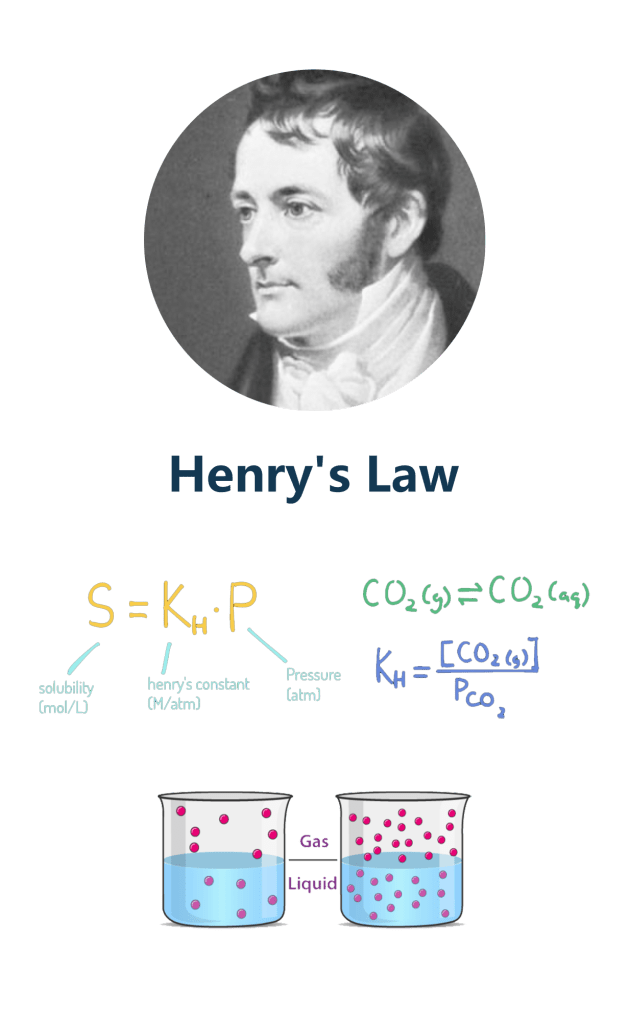
Henry’s Law
At a constant temperature, the solubility of oxygen in plasma increases proportionally with the partial pressure of oxygen in the surrounding air.
Oxygen requires pressure to dissolve effectively in plasma. In a high-pressure environment, higher levels of oxygen can penetrate deeper into human tissues, enhancing oxygen delivery and supporting various physiological processes.
Boyle’s Law
At a constant temperature, the volume of a gas is inversely proportional to its pressure, while its density is directly proportional to the pressure.
When pressure increases, the distance between gas molecules decreases, and the repulsion between them intensifies. This creates a dynamic equilibrium, promoting the diffusion of gas molecules into liquids, such as blood plasma, while reducing their escape.
The result is a denser oxygen environment, allowing more oxygen molecules to diffuse into the bloodstream, saturating the plasma and enhancing oxygen delivery to the body’s tissues.

Charles’s Law
On the absolute temperature scale, if the pressure remains constant, the volume of a given mass of an ideal gas is directly proportional to its temperature.
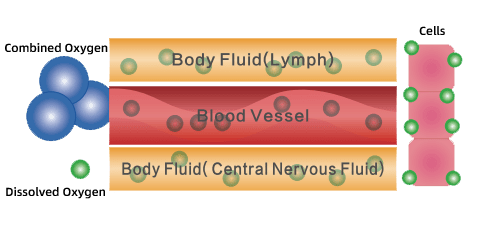
Oxygen Transport Explained
Oxygen transport in the body occurs in two forms: combined oxygen and dissolved oxygen. When oxygen enters the bloodstream, the majority binds to hemoglobin, creating combined oxygen. A smaller portion dissolves directly into the plasma, forming dissolved oxygen. Combined oxygen has difficulty passing through narrow vascular walls due to its larger size, whereas dissolved oxygen, being smaller, can penetrate more effectively. Under hyperbaric conditions, dissolved oxygen increases significantly, enhancing its ability to diffuse into blood and other bodily fluids.
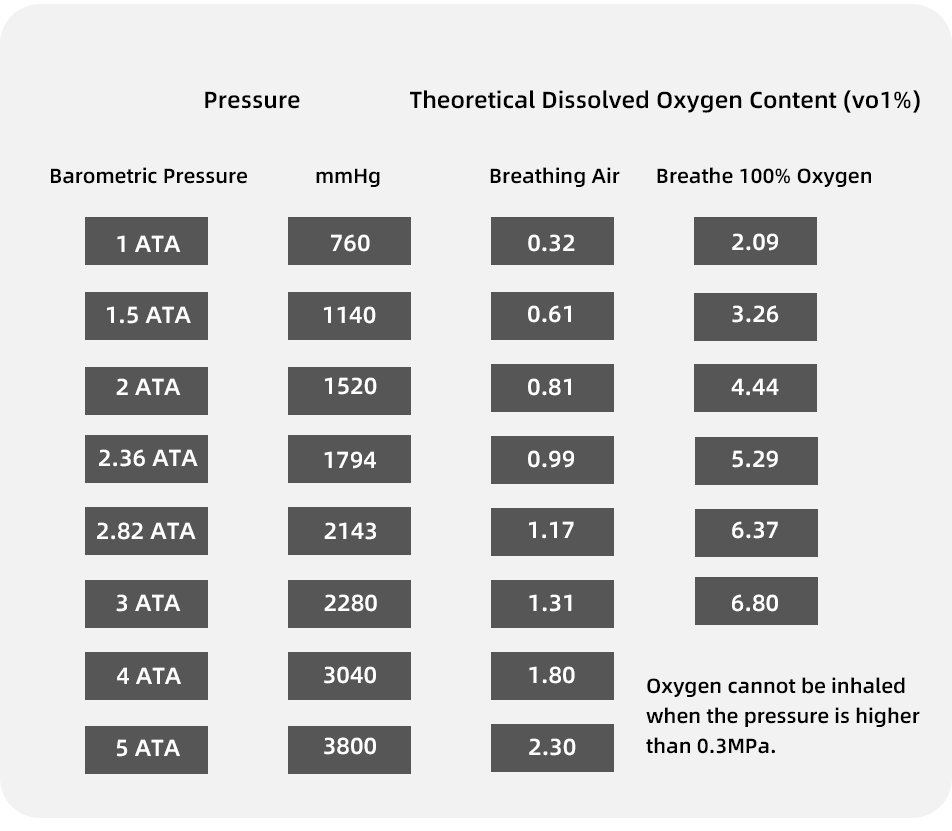
Hyperbaric Oxygen vs. Normobaric Oxygen
The difference between hyperbaric oxygen (in a pressurized environment) and normobaric oxygen lies in the shift from quantitative to qualitative benefits. Breathing pure oxygen at atmospheric pressure can saturate blood oxygen levels to 100%. However, in a hyperbaric environment, oxygen therapy goes beyond saturation—it enhances oxygen reserves, penetration into tissues, and physical solubility in the blood. This results in a profound qualitative improvement in health benefits, offering far greater therapeutic potential.
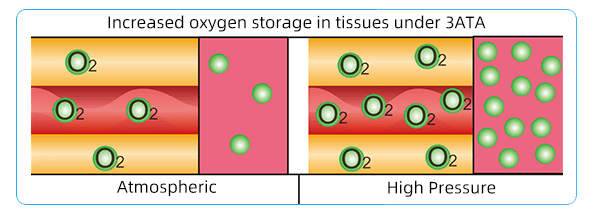

Enhanced Oxygen Storage and Diffusion in Hyperbaric Conditions
Hyperbaric oxygen therapy significantly boosts the oxygen storage capacity of tissues. At 3 ATA, oxygen storage increases from 13 ml/kg to 53 ml/kg, approximately a fourfold rise. Additionally, the diffusion radius of oxygen, which is around 30 micrometers at atmospheric pressure, extends dramatically under hyperbaric conditions, reaching up to 300 micrometers at the venous end of capillaries at 3 ATA. This enhanced oxygen delivery improves tissue oxygenation and overall therapeutic effectiveness.
 hyperbarichealthsolutions.net